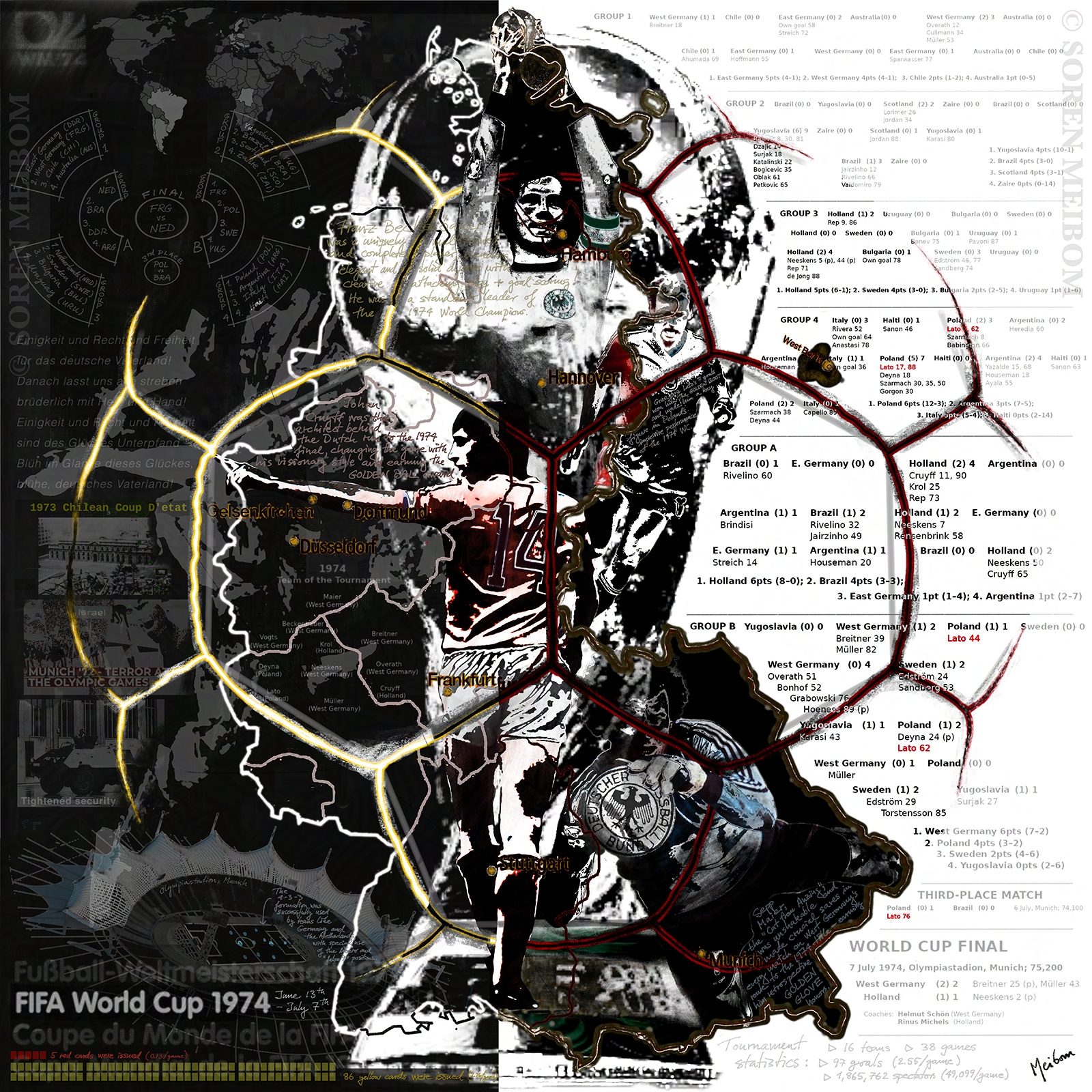
The 1974 World Cup in West Germany unfolded just 2 years after the Munich Olympics massacre, under a level of security that signaled a new era for global sport. It was also shaped by Cold War division: both German states appeared, and East Germany, in its only World Cup appearance, defeated the hosts 1–0 in one of the group stage’s defining games.Zaire and Australia widened the field, while Silvio Gazzaniga’s new FIFA World Cup Trophy replaced the Jules Rimet Trophy permanently claimed by Brazil in 1970, giving the tournament a new golden symbol. On the field, FIFA kept the 16- team structure but replaced quarterfinals and semifinals with a second group stage, sending only the 2 group winners to the final and the runners-up to the 3rd-place match. The format rewarded consistency but softened the drama of knockout soccer. Tactically, the tournament belonged to the Netherlands’ Total Football, a fluid 4-3-3/3-4-3 system built on pressing, positional exchange, and Johan Cruyff’s roaming intelligence. Yet the title went to a more structured West Germany, while Poland’s fast, fearless side finished 3rd. Together, security, division, innovation, and tactical revolution made 1974 a modern World Cup in both promise and pressure.
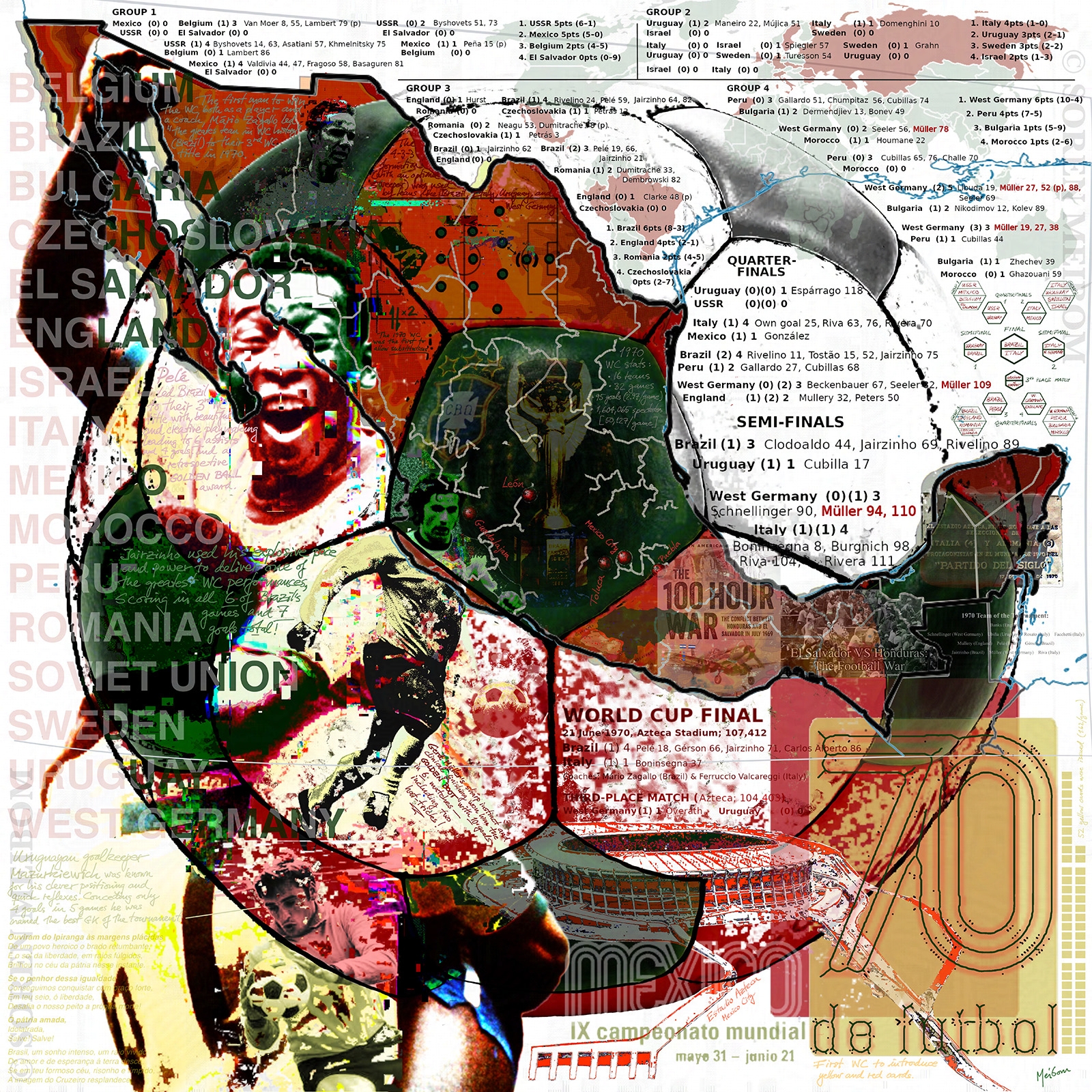
The 1970 World Cup in Mexico marked a bright turning point in soccer history —the first played in North America and the first broadcast live in color to a truly global audience. The tournament kept the compact 16-team format of 4 groups feeding directly into the quarterfinals. It introduced yellow and red cards and substitutions for the first time, and used goal difference as a formal tiebreaker, giving the competition a more modern feel. Played at high altitude and in extreme heat, it became a test of stamina as much as skill, yet the soccer remained daring, fluid, and unusually attacking. Beyond the field, qualification had already produced the brief but deadly 100-hour Football War between El Salvador and Honduras, showing how quickly soccer could become entangled with nationalism, violence, and political grievance. Against that backdrop, the tournament opened out into something vivid and new: Pelé’s final World Cup, Brazil’s dazzling attack, Italy’s steel, West Germany’s resolve, and Peru’s flair all helped turn Mexico 1970 into more than a championship. It felt like the moment the World Cup became visually and culturally unforgettable.
See the full picture in the content guide
[For full screen view select presentation mode from top right corner of PDF viewer]