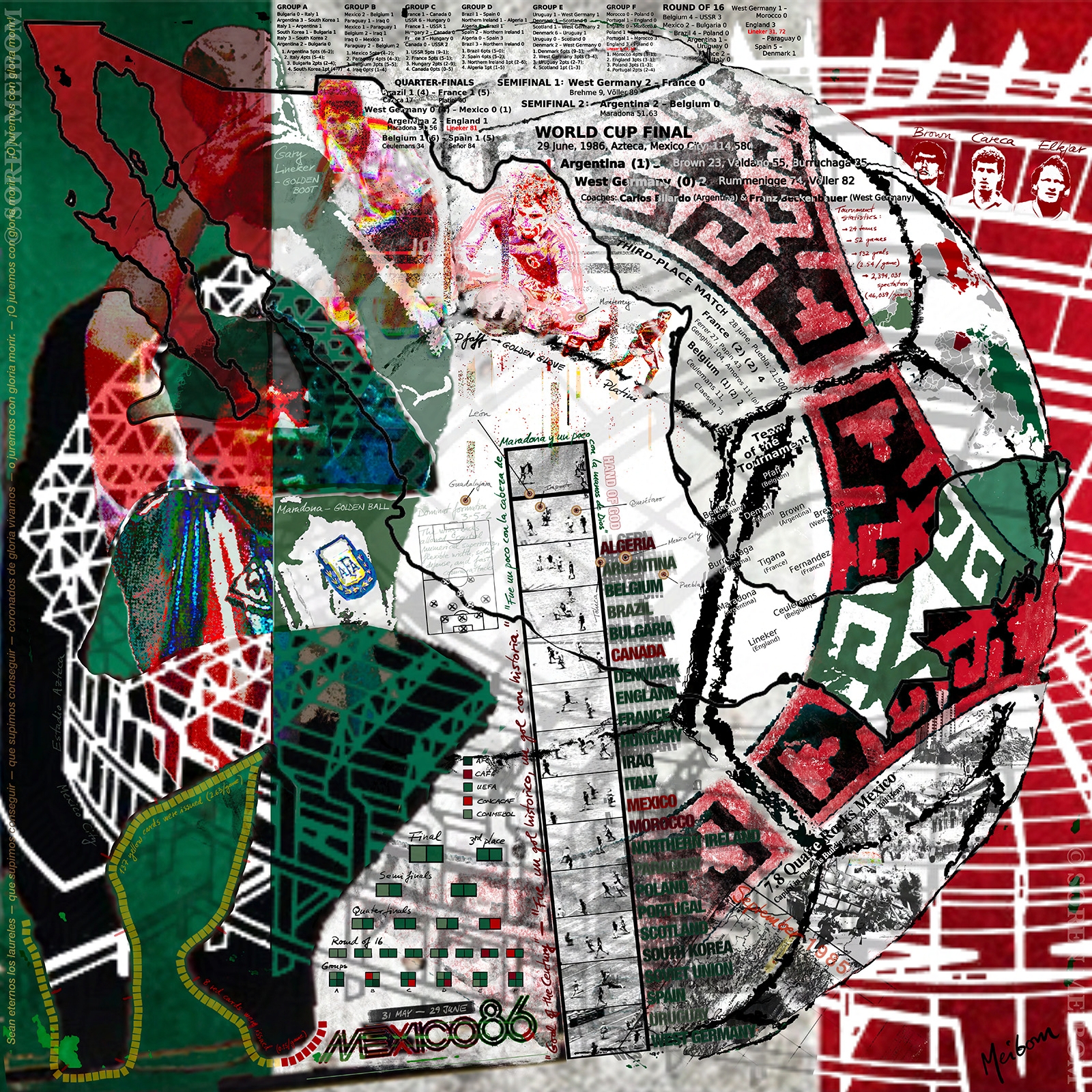
The 1986 World Cup in Mexico unfolded under unusual circumstances. It was relocated after Colombia’s withdrawal and staged less than a year after a devastating earthquake in Mexico City that left the host nation rebuilding in full public view.The tournament continued the 24-team format, with the 4 best third-place finishers also advancing to the knockout stage. It broadened global participation while still allowing uneven paths through the competition. Matches were played at high altitude, in thin air, and in extreme heat under a relentless sun. These harsh conditions slowed the tempo, tested endurance, and left games hanging on a single mistake or moment of brilliance.Tactically, discipline and improvisation existed side by side. Flexible formations with three defenders and advancing wingbacks gave creative players room to shape matches, most notably Diego Maradona, whose two goals against England — one controversial, one extraordinary — became the defining images of the tournament. Beyond the field, the Falklands War still echoed in Argentina’s meeting with England, while Mexico, the first nation to host the World Cup twice, emerged as a symbol of resilience, pride, and recovery before a global audience.
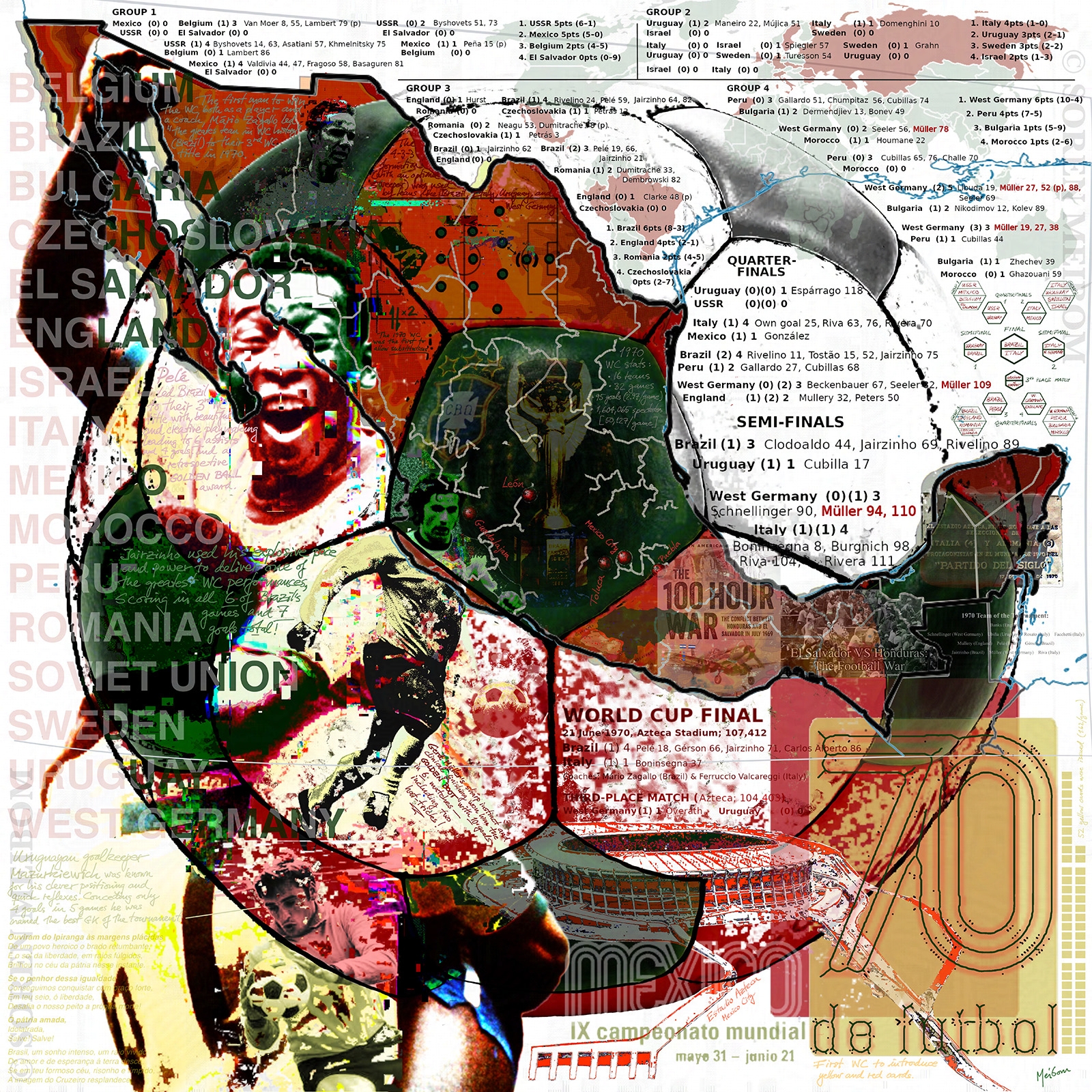
The 1970 World Cup in Mexico marked a bright turning point in soccer history —the first played in North America and the first broadcast live in color to a truly global audience. The tournament kept the compact 16-team format of 4 groups feeding directly into the quarterfinals. It introduced yellow and red cards and substitutions for the first time, and used goal difference as a formal tiebreaker, giving the competition a more modern feel. Played at high altitude and in extreme heat, it became a test of stamina as much as skill, yet the soccer remained daring, fluid, and unusually attacking. Beyond the field, qualification had already produced the brief but deadly 100-hour Football War between El Salvador and Honduras, showing how quickly soccer could become entangled with nationalism, violence, and political grievance. Against that backdrop, the tournament opened out into something vivid and new: Pelé’s final World Cup, Brazil’s dazzling attack, Italy’s steel, West Germany’s resolve, and Peru’s flair all helped turn Mexico 1970 into more than a championship. It felt like the moment the World Cup became visually and culturally unforgettable.
See the full picture in the content guide
[For full screen view select presentation mode from top right corner of PDF viewer]