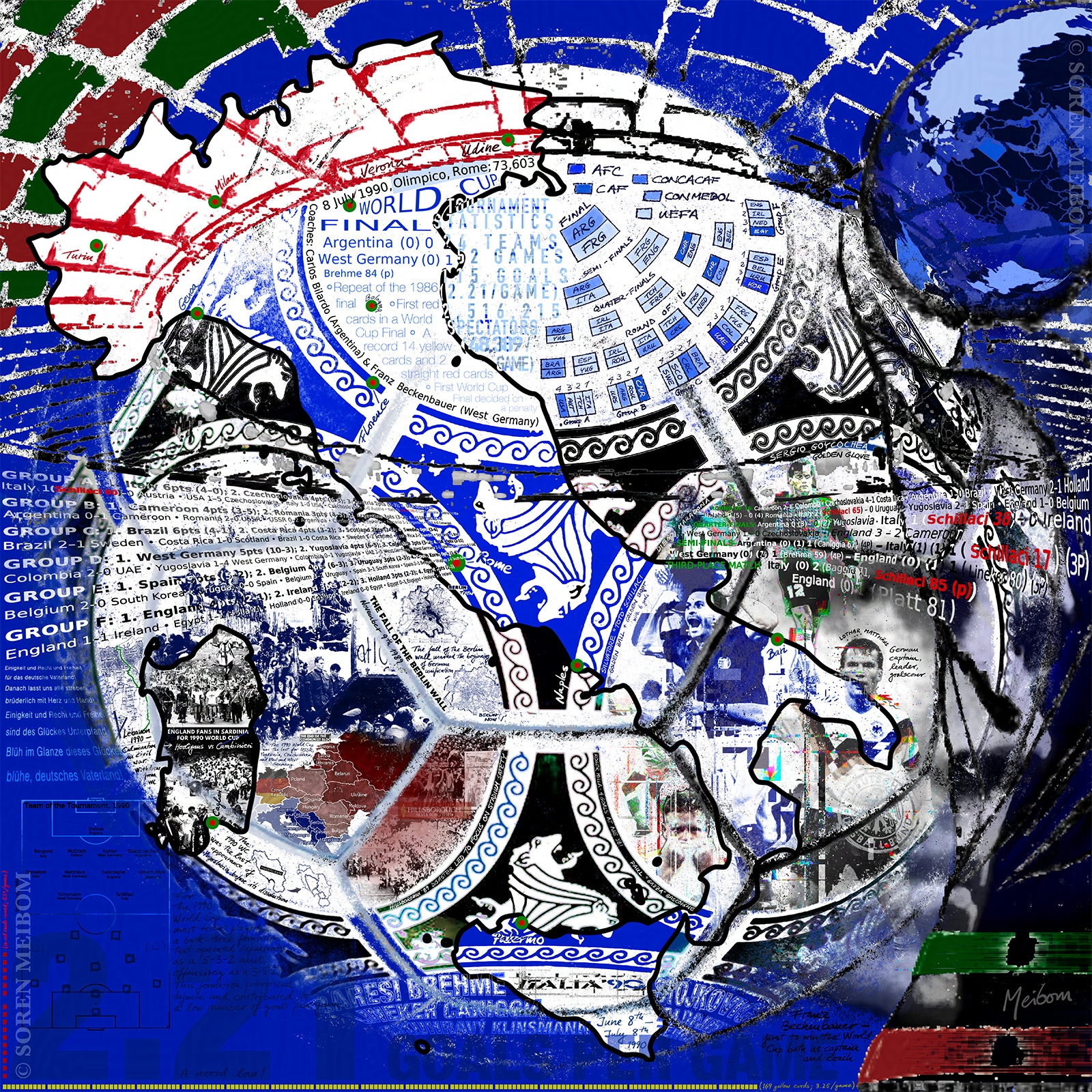
The 1990 World Cup in Italy represented transition, both for soccer and for the world staging it. Italy expanded the spectacle with new stadiums, monumental architecture, and security, and broadcasting reached unprecedented global audiences. On the field, the soccer tightened with cautious play shaped by two points for a win, permissive use of the goalkeeper, and tactics that rewarded organization, discipline, and restraint over risk. Teams built around positional order, physical balance, and game management at the highest level advanced steadily, and penalties became a viable strategic endpoint rather than a last resort. The result was the lowest-scoring World Cup of the modern era—an outcome that would soon force fundamental rule changes. Beyond results, Italia ’90 became a tournament of endings. Held just months after the fall of the Berlin Wall, it marked the final World Cup appearance for several nations of the Cold War soccer map. Teams competed under flags that would soon disappear, giving the tournament a quiet historical weight. In hindsight, Italia ’90 stands as a hinge point: expansive in scale, restrained in play, and defined by transition, closing one era of world soccer as the next began to take shape.
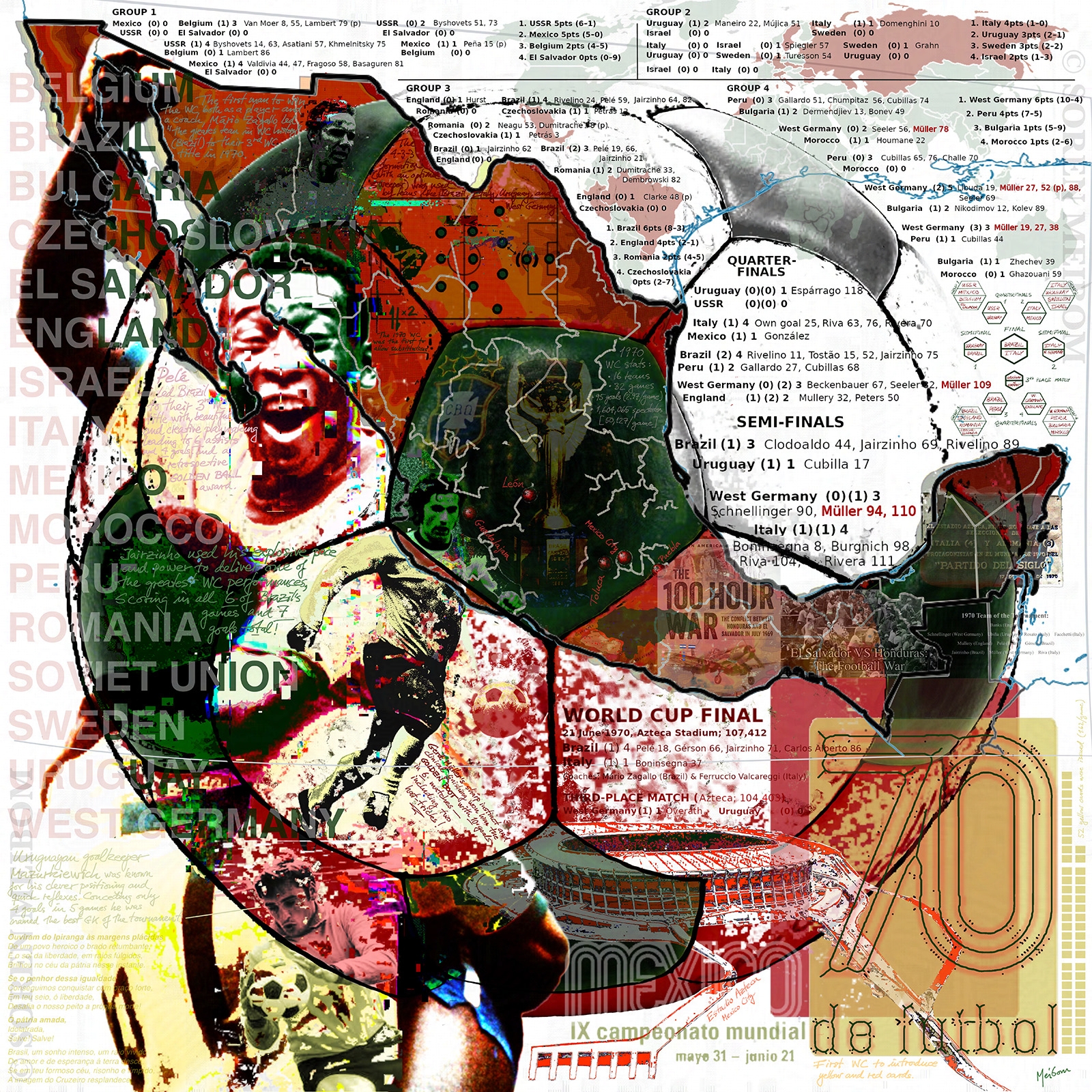
The 1970 World Cup in Mexico marked a bright turning point in soccer history —the first played in North America and the first broadcast live in color to a truly global audience. The tournament kept the compact 16-team format of 4 groups feeding directly into the quarterfinals. It introduced yellow and red cards and substitutions for the first time, and used goal difference as a formal tiebreaker, giving the competition a more modern feel. Played at high altitude and in extreme heat, it became a test of stamina as much as skill, yet the soccer remained daring, fluid, and unusually attacking. Beyond the field, qualification had already produced the brief but deadly 100-hour Football War between El Salvador and Honduras, showing how quickly soccer could become entangled with nationalism, violence, and political grievance. Against that backdrop, the tournament opened out into something vivid and new: Pelé’s final World Cup, Brazil’s dazzling attack, Italy’s steel, West Germany’s resolve, and Peru’s flair all helped turn Mexico 1970 into more than a championship. It felt like the moment the World Cup became visually and culturally unforgettable.
See the full picture in the content guide
[For full screen view select presentation mode from top right corner of PDF viewer]