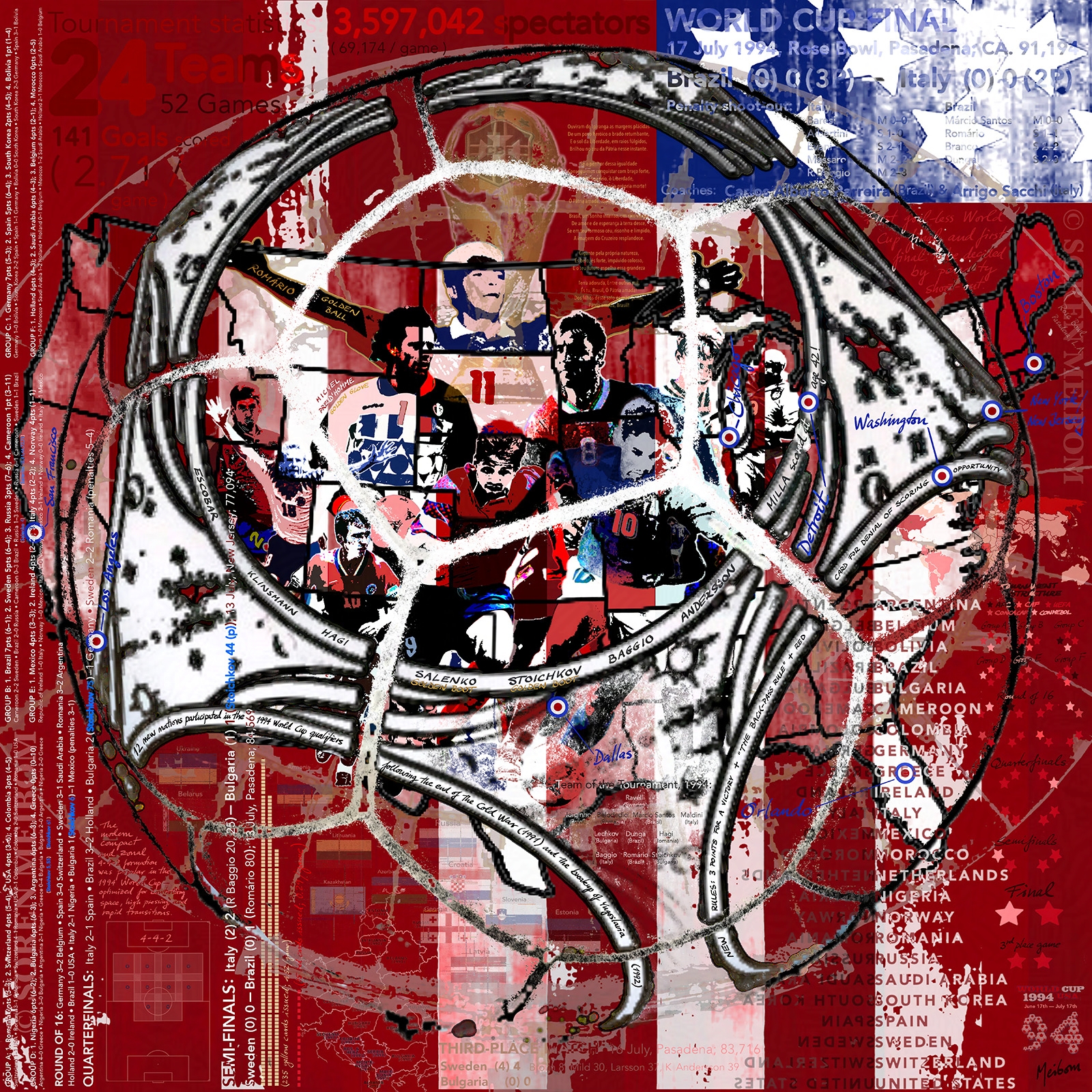
The 1994 World Cup in the USA marked a turning point: FIFA brought the tournament to the United States to scale soccer through infrastructure, media, and spectacle. The result was historic attendance and a World Cup staged in vast American football stadiums, proving the sport could fill arenas far beyond its traditional heartlands. On the field, the competition felt newly modern. The 3-point win, the back-pass rule, and stricter enforcement pushed tempo, risk, and pressing, helping reverse the defensive caution of 1990.The final distilled the era’s tension: a tightly controlled match ended scoreless after extra time, and Brazil claimed a fourth title by defeating Italy in the first World Cup final decided on penalties. The tournament also mirrored a world in rapid political realignment. New nations entered qualification after the Soviet collapse, while Yugoslavia (Serbia and Montenegro) was absent under UN sanctions.Emerging teams announced themselves — from Nigeria’s pace to Bulgaria and Sweden’s improbable runs — yet the tournament’s global reach carried a darker reminder of soccer’s stakes when the aftermath surrounding Andrés Escobar exposed how pressure and violence could follow players beyond the stadium.
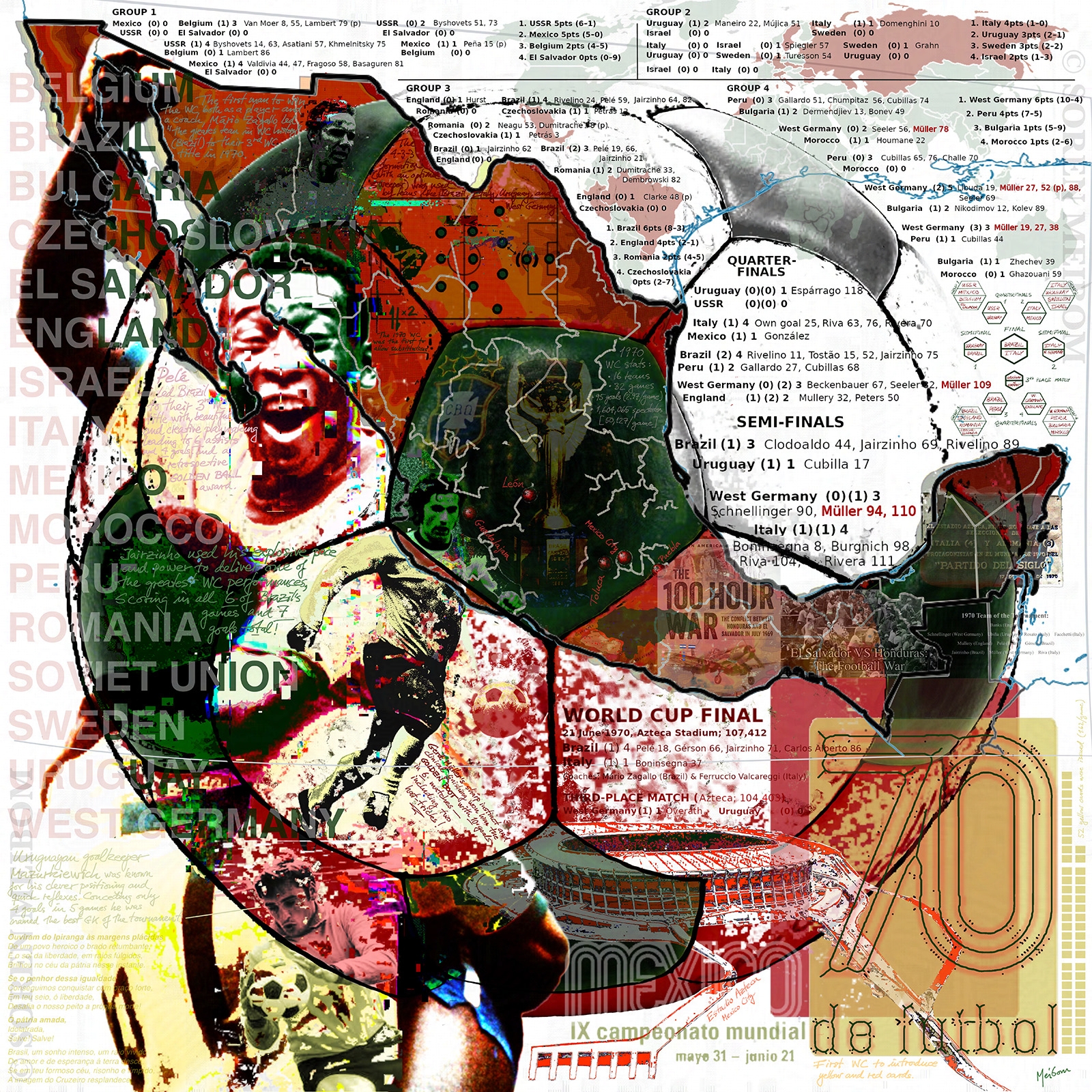
The 1970 World Cup in Mexico marked a bright turning point in soccer history —the first played in North America and the first broadcast live in color to a truly global audience. The tournament kept the compact 16-team format of 4 groups feeding directly into the quarterfinals. It introduced yellow and red cards and substitutions for the first time, and used goal difference as a formal tiebreaker, giving the competition a more modern feel. Played at high altitude and in extreme heat, it became a test of stamina as much as skill, yet the soccer remained daring, fluid, and unusually attacking. Beyond the field, qualification had already produced the brief but deadly 100-hour Football War between El Salvador and Honduras, showing how quickly soccer could become entangled with nationalism, violence, and political grievance. Against that backdrop, the tournament opened out into something vivid and new: Pelé’s final World Cup, Brazil’s dazzling attack, Italy’s steel, West Germany’s resolve, and Peru’s flair all helped turn Mexico 1970 into more than a championship. It felt like the moment the World Cup became visually and culturally unforgettable.
See the full picture in the content guide
[For full screen view select presentation mode from top right corner of PDF viewer]