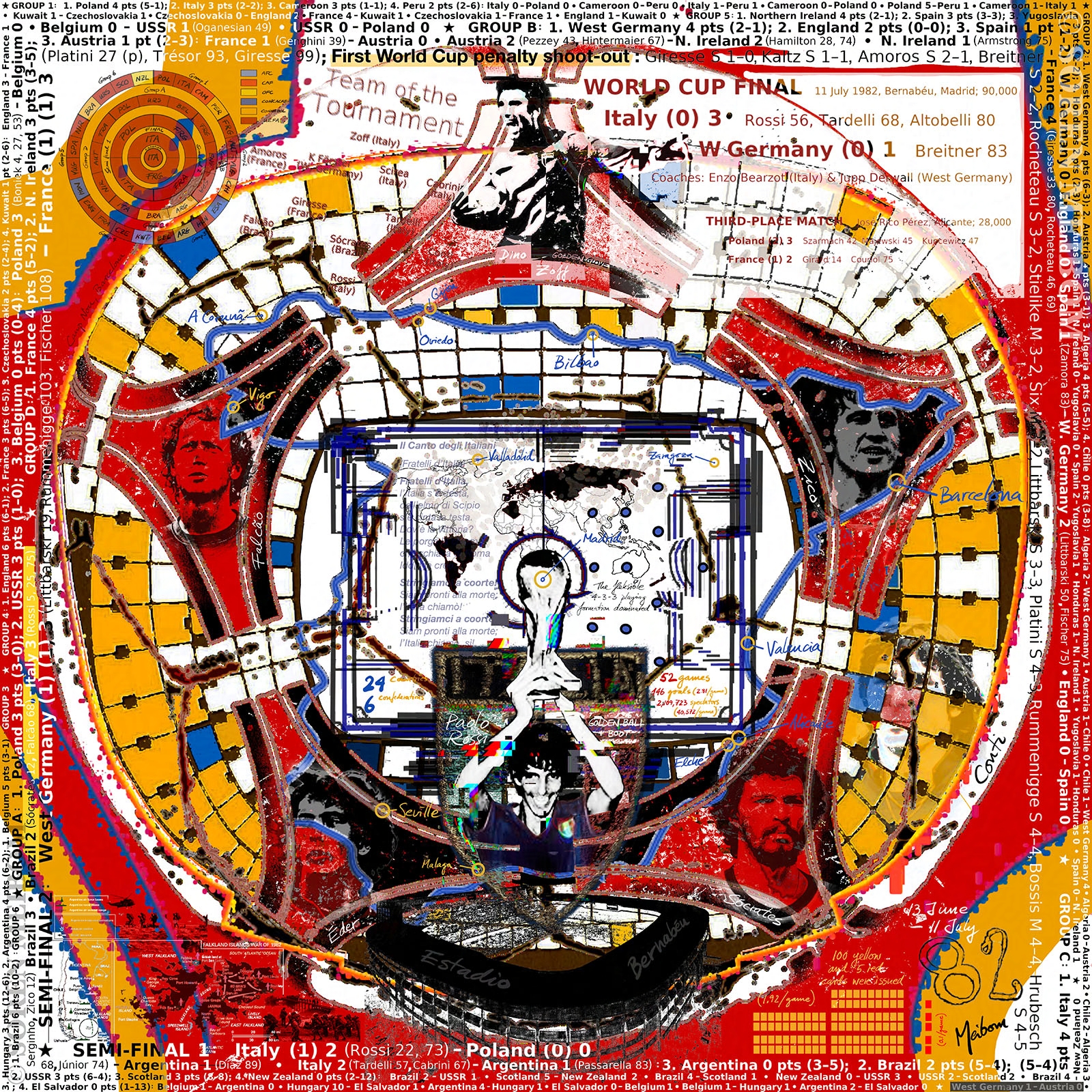
The 1982 World Cup in Spain arrived as soccer stepped onto a bigger stage. The finals expanded from 16 to 24 teams and crucially, had representation from all six confederations. The format was a new twist to the two group phases before the semifinals, a structure that produced memorable football and controversy in equal measure. On the field, contrasts defined the spectacle. Brazil dazzled with Zico, Sócrates, Falcão, and Éder—fluid, expressive, unforgettable—yet fell to Rossi’s, Conti’s and Zoff’s Italy, who found perfect timing and stormed past Brazil, Poland, and West Germany to the title.Algeria’s historic upset was overshadowed by the “Disgrace of Gijón”, and the “Night of Seville” between West Germany and France delivered drama, injuries, and the first World Cup semifinal decided on penalties. Meanwhile, global tensions framed the spectacle. Spain was still defining its post-Franco democracy and beyond Europe the Falklands War cast a shadow — particularly for Argentina and England, whose teams competed under the glare of a conflict unfolding far from the pitch. Televised in color to a vast audience, the 1982 World Cup felt like the moment soccer became truly and permanently cinematic.
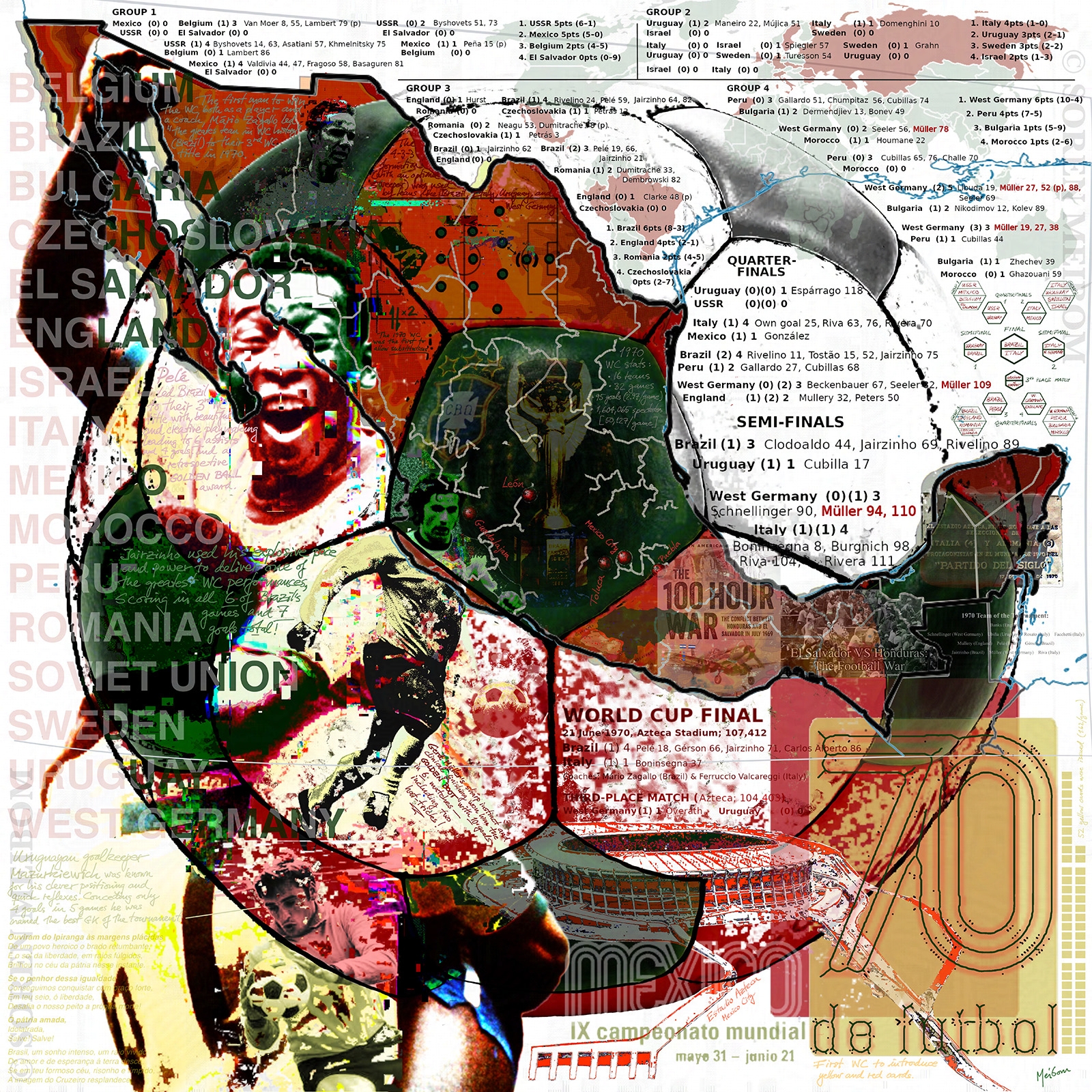
The 1970 World Cup in Mexico marked a bright turning point in soccer history —the first played in North America and the first broadcast live in color to a truly global audience. The tournament kept the compact 16-team format of 4 groups feeding directly into the quarterfinals. It introduced yellow and red cards and substitutions for the first time, and used goal difference as a formal tiebreaker, giving the competition a more modern feel. Played at high altitude and in extreme heat, it became a test of stamina as much as skill, yet the soccer remained daring, fluid, and unusually attacking. Beyond the field, qualification had already produced the brief but deadly 100-hour Football War between El Salvador and Honduras, showing how quickly soccer could become entangled with nationalism, violence, and political grievance. Against that backdrop, the tournament opened out into something vivid and new: Pelé’s final World Cup, Brazil’s dazzling attack, Italy’s steel, West Germany’s resolve, and Peru’s flair all helped turn Mexico 1970 into more than a championship. It felt like the moment the World Cup became visually and culturally unforgettable.
See the full picture in the content guide
[For full screen view select presentation mode from top right corner of PDF viewer]